
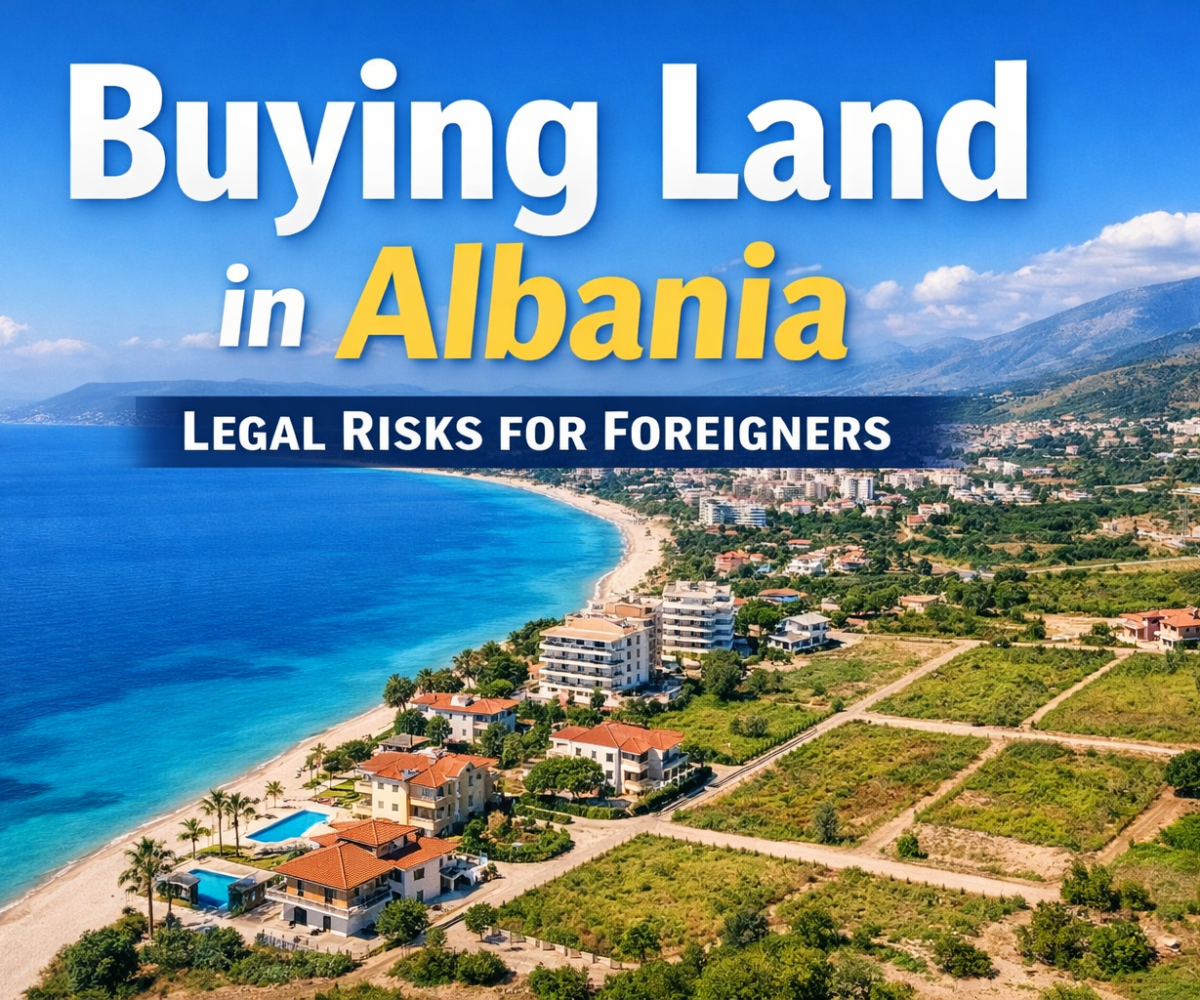
Buying Land in Albania: Legal Risks Foreign Buyers Must Understand
Buying land in Albania is a substantial legal and financial transaction, particularly where the purchaser intends to develop the property for residential, tourism, commercial or other investment purposes.
For a foreign buyer, the central issue is not simply whether a parcel is offered for sale. The purchaser must establish who legally owns the land, whether the title can be validly transferred, how the property is registered, what rights or restrictions affect it, and whether its intended use is legally compatible with the applicable planning and regulatory framework.
Land transactions can therefore require considerably more than a review of the documents presented by the seller. A proper legal assessment should examine the property as a whole and identify matters that could affect the acquisition, future use or development of the land.
Vladimir Sadikaj Law Office provides independent legal counsel to foreign purchasers and investors acquiring land and real estate in Albania, including title due diligence, cadastral assessment, contractual review and legal representation throughout the transaction.
Why Land Acquisition Requires Professional Legal Due Diligence
Land is not legally interchangeable simply because two parcels appear similar from a commercial or physical perspective. Each property has its own ownership history, cadastral identity, classification, restrictions and legal circumstances.
A professional legal assessment may therefore examine:
- ownership and title history;
- cadastral registration and property identification;
- co-ownership and inheritance matters;
- mortgages, liens and other encumbrances;
- judicial or administrative restrictions;
- land classification and permitted use;
- planning and development considerations;
- existing structures and their legal status;
- access and other property-related rights;
- the contractual structure of the proposed acquisition.
The purpose of due diligence is not merely to establish that documents exist. It is to determine their legal significance and assess their consequences for the purchaser.
Can Foreigners Buy Land in Albania?
The legal position of a foreign purchaser depends on the nature and classification of the property and the applicable legal framework.
Different categories of land may be subject to different rules and legal considerations. For this reason, a foreign investor should not assume that the rules applicable to an apartment or other type of property automatically apply to every category of land.
Where the acquisition involves land intended for development, agricultural land or property subject to particular planning or regulatory considerations, the appropriate legal structure should be assessed in advance.
The acquisition structure should follow the legal assessment of the property, rather than the other way around.
Main Legal Risks When Buying Land in Albania
Unclear or Complex Ownership Titles
One of the most important areas of legal due diligence is the ownership history of the land.
Issues may arise where the property has passed through inheritance, has multiple owners, has been transferred several times or contains inconsistencies between historical and current documentation.
A complex title does not automatically mean that the property cannot be acquired. It means that the legal chain of ownership and the seller’s authority to transfer the property must be properly assessed.
Co-Ownership and Inheritance Issues
Land may be registered in the names of several individuals, particularly where ownership originates from inheritance.
In such circumstances, the purchaser’s lawyer should determine who holds the relevant ownership interests and whether all necessary parties are able to participate in or validly authorise the transaction.
Failure to properly address the rights of all relevant owners can create difficulties in completing or registering the acquisition.
Cadastral and Boundary Issues
The legal identity of the land should correspond with the cadastral documentation and the property being presented to the purchaser.
The legal review may consider the property number, cadastral zone, registered area, cadastral records, maps and other documents relevant to the identification of the parcel.
Where there are discrepancies concerning boundaries, surface area or identification, these matters should be investigated before completion.
Zoning, Land Classification and Use Restrictions
Ownership of land and the right to use or develop that land for a particular purpose are separate legal questions.
Depending on the property, the legal assessment may need to consider:
- land classification;
- planning and zoning parameters;
- permitted uses;
- development conditions;
- environmental considerations;
- location-specific restrictions.
A parcel being marketed as “buildable” does not, by itself, establish the legal right to carry out a particular development.
Existing or Unauthorised Constructions
Where land contains an existing building or other structure, its legal status may need to be assessed separately from the ownership of the underlying land.
Depending on the circumstances, the review may concern construction documentation, registration of the structure and any issues affecting its legal status.
For an investor intending to develop the land, these matters can become particularly important when determining the legal and planning position of the proposed project.
Mortgages, Liens and Legal Claims
Land may be affected by mortgages, liens, judicial measures, administrative restrictions or other rights of third parties.
The purchaser’s counsel should identify such matters and assess their legal effect before the purchaser assumes the relevant financial or contractual exposure.
The existence of an encumbrance is a legal issue to be analysed, not simply a box to be marked as “clear” or “unclear”.
Development Potential Is Not the Same as Development Rights
This distinction is particularly important for investors purchasing land for future development.
A parcel may be located in an attractive area and appear commercially suitable for a villa, hotel, resort or residential project. That does not automatically establish that the proposed development can legally be carried out.
The purchaser should therefore distinguish between:
- the location of the land;
- ownership of the land;
- its legal classification and permitted use;
- applicable planning parameters;
- the legal requirements for the intended development.
Professional legal advice is particularly valuable at this stage because the investor’s commercial expectations should be tested against the legal position of the actual parcel.
Access and Other Property-Related Rights
For land acquisitions, the legal assessment may also need to consider whether the property has the rights and legal relationships necessary for its intended use.
Depending on the circumstances, this may include matters concerning access, neighbouring properties, infrastructure and other rights affecting the practical use of the land.
These issues may be particularly relevant where the parcel is intended for construction or a larger development project.
Contractual Protection When Buying Land
The purchase contract should not be treated as a purely formal document. It is one of the principal instruments through which the legal and financial risks of the transaction are allocated between the parties.
A buyer-side lawyer may therefore review and negotiate provisions concerning:
- precise identification of the land;
- ownership and title representations;
- existing encumbrances;
- conditions precedent to completion;
- payment arrangements;
- seller obligations;
- completion deadlines;
- default and contractual remedies;
- termination rights;
- refund provisions where applicable;
- completion and registration requirements.
The contractual structure should reflect the findings of the legal due diligence and provide appropriate protection for the purchaser.
The Role of an Independent Lawyer in a Land Acquisition
The role of the purchaser’s lawyer extends well beyond reviewing a title document.
Depending on the transaction, legal counsel may conduct an independent assessment of the property, analyse the ownership structure, identify legal risks, advise on contractual protection and remain involved through completion and registration.
The lawyer may also coordinate the legal aspects of the transaction with the notary and relevant institutions.
The lawyer’s role is to provide independent legal judgment and protect the purchaser’s position—not simply to facilitate the transaction.
Why Foreign Buyers Should Have Independent Buyer-Side Counsel
A foreign purchaser may receive information from a seller, developer or real estate agent. These sources can provide commercially relevant information, but they do not replace independent legal advice.
The purchaser’s lawyer approaches the transaction from a different perspective: the legal interests and potential exposure of the purchaser.
This is particularly important for foreign investors who may be unfamiliar with Albanian cadastral records, ownership structures, contractual terminology or the legal framework applicable to land and development.
Formal Property Legal Due Diligence Report
For significant or complex land acquisitions, Vladimir Sadikaj Law Office may prepare a formal Property Legal Due Diligence Report.
The report may set out the documentation reviewed, ownership and cadastral findings, relevant legal issues, risk considerations and recommendations concerning the proposed acquisition.
For international investors, a formal report in English can provide a clear written record of the legal assessment conducted before completion.
This approach can be particularly appropriate for acquisitions involving substantial land holdings, multiple owners, inherited property, development projects or other complex legal circumstances.
Buying Land in Vlore and Other Areas of Albania
Vlore and other coastal areas of Albania attract purchasers considering residential, tourism and development-related acquisitions. Other regions may present different legal and commercial characteristics.
However, the location of the land should be treated as context rather than as a substitute for property-specific legal analysis.
The legal position of the individual parcel remains fundamental regardless of how attractive its location may appear.
Legal Due Diligence Before Committing Capital
A purchaser should ideally obtain independent legal advice before signing binding documents or transferring substantial funds.
If a material legal issue is identified, the purchaser can then determine whether it can be resolved, addressed through contractual protection or requires reconsideration of the proposed acquisition.
This is one of the principal advantages of conducting due diligence before, rather than after, the purchaser becomes substantially committed to the transaction.
Legal Assistance for Foreign Investors Buying Land in Albania
Vladimir Sadikaj Law Office provides independent legal counsel to foreign purchasers and investors acquiring land and real estate in Albania.
Depending on the nature and complexity of the transaction, legal assistance may include:
- ownership and title due diligence;
- cadastral verification;
- analysis of inheritance and co-ownership;
- assessment of encumbrances and third-party rights;
- land classification and use assessment;
- planning and development-related legal analysis;
- construction and existing-building review;
- contract review and negotiation;
- coordination with the notary and relevant authorities;
- representation through completion and registration;
- preparation of a formal Legal Due Diligence Report where appropriate.
The scope of legal representation is determined according to the particular property, transaction structure and objectives of the purchaser.
FAQ – Buying Land in Albania
Can foreigners buy land in Albania?
The legal position depends on the type and classification of the land and the applicable legal framework. Foreign purchasers should obtain property-specific legal advice before determining the appropriate acquisition structure.
What are the main legal risks when buying land in Albania?
Potential issues include complex ownership, inheritance and co-ownership, cadastral inconsistencies, boundary matters, encumbrances, land classification, development restrictions, construction issues and inadequate contractual protection.
Is land ownership the same as the right to build?
No. Ownership and development rights are separate legal questions. Owning a parcel does not automatically establish that a particular construction or development project can be carried out on it.
Do I need a lawyer to buy land in Albania?
For a significant acquisition, independent legal counsel can assess the title, cadastral position, ownership structure, restrictions, development considerations and contractual arrangements before the purchaser becomes materially committed.
Is buying land in Vlore safe for foreign investors?
The legal suitability of a land acquisition depends on the individual property and transaction. The appropriate approach is to conduct independent legal due diligence and establish the property’s legal position before committing substantial capital.
Need Legal Counsel for Buying Land in Albania?
If you are considering purchasing land in Albania, particularly for a development or investment project, Vladimir Sadikaj Law Office can provide independent buyer-side legal counsel throughout the transaction.
The legal assessment is structured around the specific property and may extend from title and cadastral due diligence through contractual negotiations, completion and registration.
📞 Phone / WhatsApp: 0693046479
📍 Location: Vlore, Albania
Independent Legal Assessment. Buyer-Side Counsel. Professional Representation.