
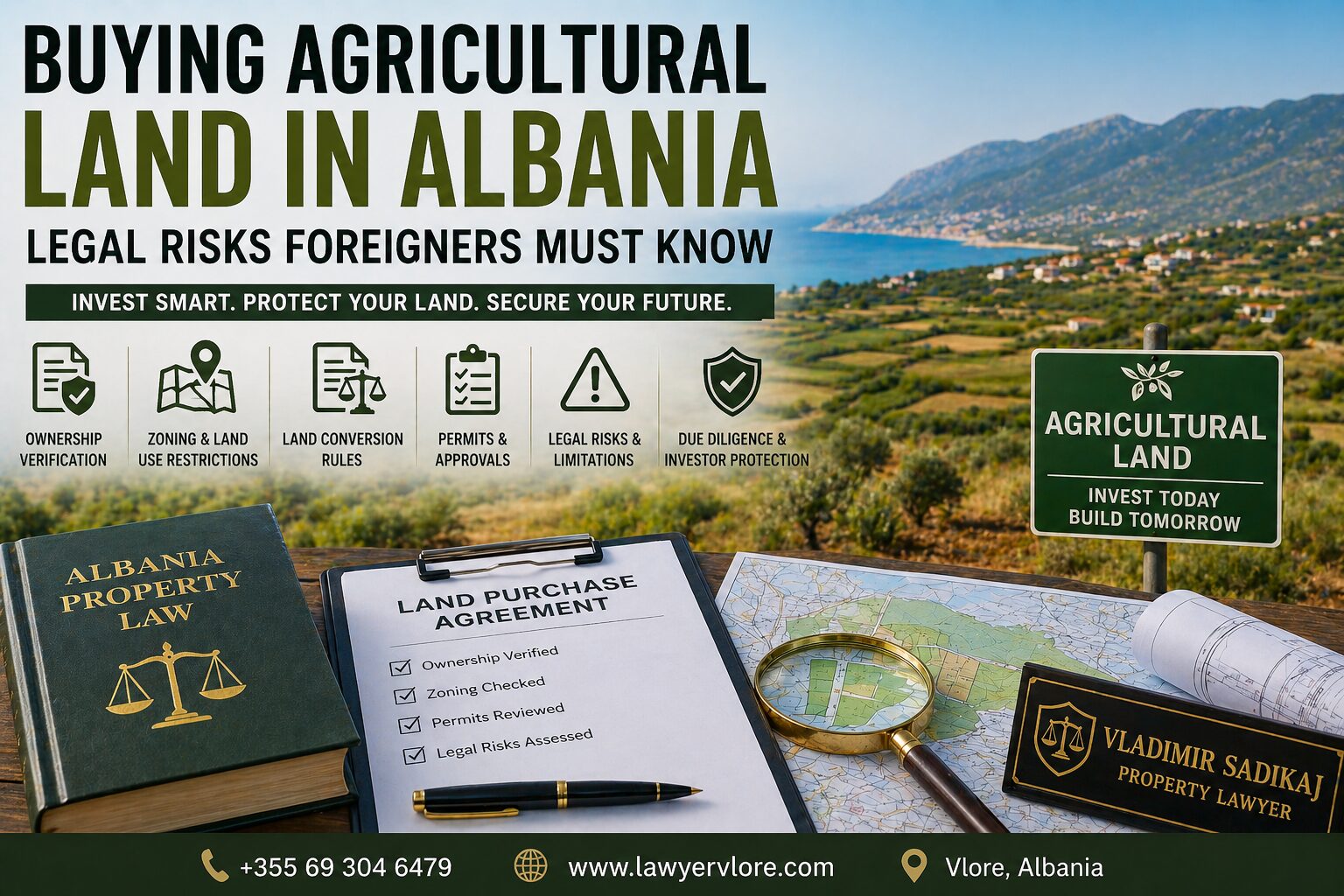
Buying Agricultural Land in Albania: Legal Risks Foreign Buyers Should Understand
Agricultural land in Albania can attract foreign purchasers because of its location, parcel size and potential suitability for agricultural or other permitted uses. However, agricultural land is subject to a legal and regulatory framework that differs from residential, commercial and other categories of property.
For a foreign purchaser, the first question should not simply be whether the land is available for sale or commercially attractive. The legal investigation should establish the property’s classification, ownership status, cadastral registration, applicable land-use restrictions and whether the proposed acquisition structure complies with Albanian law.
This is particularly important where the purchaser is considering agricultural land for farming, tourism-related activities, development, construction or another use that may differ from its current legal classification.
This guide outlines the principal legal issues that foreign buyers should consider before proceeding with the acquisition of agricultural land in Albania.
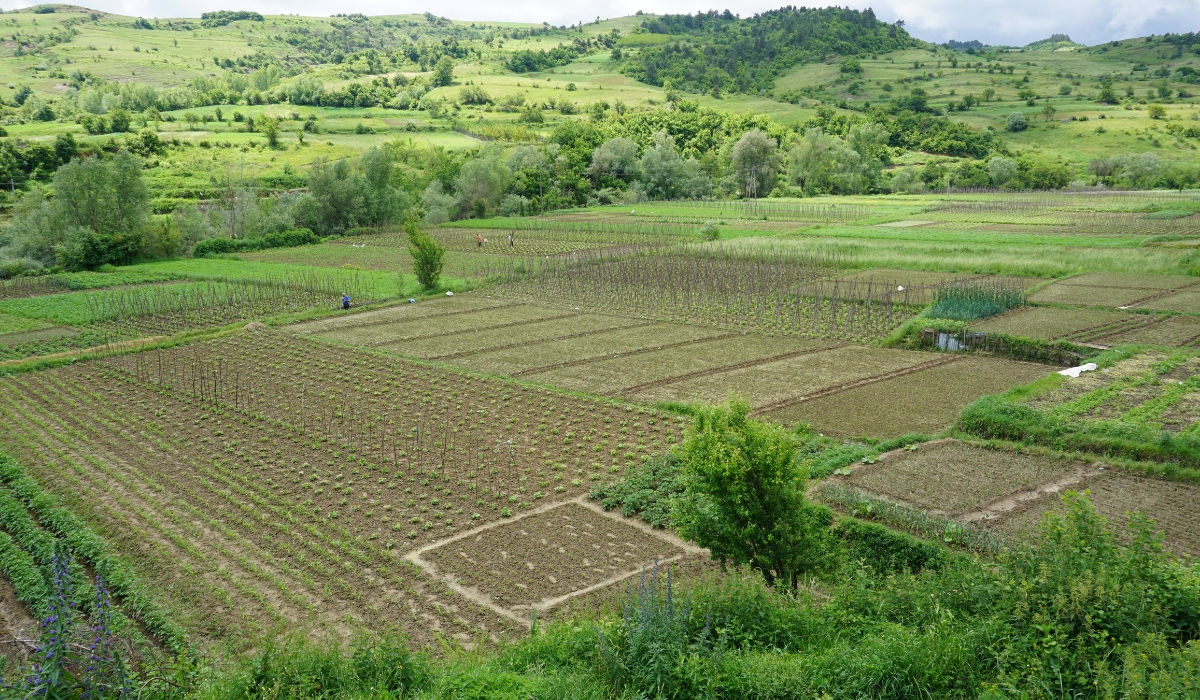
Why Agricultural Land Requires Particular Legal Attention
Agricultural land should not be assessed in the same manner as a standard apartment or residential property.
Depending on the property and intended transaction, the legal investigation may need to address:
- Land classification
- Ownership and title
- Cadastral registration
- Inheritance and co-ownership
- Boundaries and property identification
- Land-use restrictions
- Planning and development rules
- Construction limitations
- Environmental or protected-area considerations where applicable
- Rights and restrictions affecting the property
The significance of these matters depends on the particular land parcel and the purpose for which the purchaser intends to acquire it.
Can Foreigners Buy Agricultural Land in Albania?
The acquisition of agricultural land by foreign persons requires careful assessment of the applicable Albanian legal framework and the proposed ownership structure.
The legal position may depend on the type and classification of the land, the identity and structure of the purchaser and the intended use of the property.
For this reason, a foreign purchaser should obtain property-specific legal advice before signing an agreement or transferring funds. The question should be assessed in relation to the actual property and proposed transaction rather than on the basis of a general assumption that all categories of land are subject to identical rules.
Land Classification and Permitted Use
One of the first issues in agricultural land due diligence is confirming the property’s legal classification.
The purchaser should establish how the land is registered and what uses are legally available under the applicable planning and land-use framework.
Agricultural classification can have important consequences for a purchaser who intends to use the land for a purpose other than agriculture.
In particular, the fact that a parcel is large, located near a developed area or commercially presented as having development potential does not by itself establish that construction or another proposed use is legally permitted.
Land-Use and Development Restrictions
Where agricultural land is being considered for development, the distinction between ownership and development rights becomes particularly important.
Legal due diligence may need to consider:
- Current land classification
- Applicable planning instruments
- Permitted uses
- Development restrictions
- Building parameters where applicable
- Environmental requirements
- Coastal or protected-area considerations where applicable
The purchaser should not assume that acquiring the land automatically creates a right to construct a villa, hotel, resort, commercial facility or other development on the property.
Changing the Use or Classification of Agricultural Land
A purchaser may acquire agricultural land with the intention of changing its use in the future. Such an intention requires separate legal analysis.
Depending on the circumstances, the proposed change may be subject to planning, land-use, environmental or other regulatory requirements.
Accordingly, a proposed future change in land use should be treated as a matter requiring legal and regulatory assessment rather than as an automatic consequence of purchasing the property.
The feasibility of a proposed development should be established before the purchaser relies on the anticipated change in use when evaluating the transaction.
Ownership and Title Verification
Agricultural land should undergo the same fundamental ownership investigation required for other significant property acquisitions.
The investigation may include:
- Current ownership registration
- Historical ownership documentation
- Chain of title
- Cadastral records
- Property identification
- Registered area and boundaries
- Co-ownership interests
- Inheritance-related rights
- Third-party claims or restrictions
Particular attention may be required where ownership originates from inheritance or where several persons are registered as owners.
The person negotiating the sale should not automatically be assumed to have the legal authority to transfer the entirety of the property.
Cadastral and Boundary Issues
The cadastral identity of agricultural land should be carefully assessed before completion.
The purchaser’s legal counsel may examine whether the property number, cadastral zone, registered area, boundaries and other identifying information correspond across the relevant documentation.
Where several adjoining parcels form part of a proposed acquisition, each parcel should be legally identified and assessed. Commercial descriptions of a larger area should not replace the legal identification of the individual cadastral properties.
Inheritance and Co-Ownership Risks
Agricultural land may have a long ownership history, including transfers through inheritance and succession.
Where several owners or successors hold rights in the property, the transaction must be structured so that the relevant ownership interests are properly transferred or represented.
Where a Power of Attorney is used, its validity and scope should be assessed to determine whether it provides the authority necessary for the proposed transaction.
These issues can become particularly important where the purchaser intends to acquire an entire parcel rather than an individual ownership interest.
Construction Risks on Agricultural Land
One of the most significant legal issues arises where agricultural land is being acquired for construction or development purposes.
Before relying on a development concept, the purchaser should obtain legal advice concerning whether the proposed use is compatible with the applicable land-use and planning framework and what additional approvals may be required.
The legal assessment may consider:
- Whether the intended use is permitted
- Applicable planning requirements
- Development restrictions
- Construction authorization requirements
- Environmental requirements where applicable
- Infrastructure and access considerations
The existence of agricultural land for sale should therefore not be interpreted as evidence that the property is immediately suitable for construction.
Access and Infrastructure
For rural and agricultural properties, access and infrastructure can also be relevant to the legal and practical use of the land.
Depending on the property, the investigation may consider:
- Legal access to the property
- Access rights and easements
- Road connections
- Water arrangements
- Electricity access
- Drainage and sewage considerations where relevant
These matters should be assessed in connection with the purchaser’s intended use and the legal rights attached to the property.
Encumbrances and Third-Party Rights
The purchaser should establish whether the agricultural land is affected by mortgages, judicial measures, easements, administrative restrictions, annotations or other third-party rights.
Depending on the transaction, legal due diligence may include review of the relevant cadastral records and other documentation necessary to determine whether any such matters could affect the proposed acquisition.
Current records should be obtained at the appropriate stage of the transaction rather than relying exclusively on historical documentation.
Tax and Transaction Considerations
The financial structure of an agricultural land acquisition should also be reviewed in light of the applicable transaction costs, registration requirements and other legal or fiscal obligations.
Where a corporate purchaser or another investment structure is involved, additional legal and tax considerations may arise.
The precise fiscal treatment depends on the transaction structure and the circumstances of the parties and should be confirmed with the appropriate professional advisers before completion.
Why Independent Legal Due Diligence Matters
Agricultural land due diligence should not be limited to reviewing documents supplied by the seller or real estate intermediary.
An independent purchaser-side lawyer can examine the property’s legal position from the purchaser’s perspective and assess whether the ownership, cadastral status, land classification, development intentions and contractual arrangements are consistent with the proposed acquisition.
The role of the lawyer is not simply to collect documents. It is to provide independent legal judgment, identify material issues and advise the purchaser on matters that should be clarified or resolved before completion.
Formal Agricultural Land Due Diligence Report
For significant transactions, particularly those involving foreign purchasers, large land parcels or proposed development, the findings of the investigation may be consolidated into a formal Legal Due Diligence Report.
The report may address:
- Ownership and title
- Cadastral registration
- Land classification
- Inheritance and co-ownership
- Encumbrances and third-party rights
- Planning and land-use matters
- Construction and development considerations
- Contractual issues
- Outstanding matters requiring resolution before completion
The purpose is to provide the purchaser with a structured legal assessment of the proposed acquisition rather than a simple collection of document checks.
How Vladimir Sadikaj Law Office Assists Foreign Land Purchasers
Vladimir Sadikaj Law Office provides independent legal due diligence and legal representation for foreign purchasers considering agricultural, coastal and other land acquisitions in Albania.
The legal service may include:
- Property and land due diligence
- Ownership and title investigation
- Cadastral verification
- Inheritance and co-ownership analysis
- Land classification assessment
- Planning and land-use review
- Development and construction legal assessment
- Encumbrance and third-party rights review
- Contract review and negotiation
- Transaction structuring support
- Coordination with notaries and relevant authorities
- Legal assistance through completion and registration
- Preparation of a formal Legal Due Diligence Report
The scope of the legal work is determined by the nature of the land, its ownership history, its legal classification and the purchaser’s intended use.
Strategic Considerations Before Acquiring Agricultural Land
Before proceeding with an agricultural land acquisition, the purchaser should obtain a clear legal assessment of the property’s present status and the intended transaction structure.
Particular attention should be given to:
- Whether the purchaser can lawfully acquire the relevant category of land
- Who holds the registered ownership rights
- Whether the cadastral documentation is consistent
- Whether the land is affected by encumbrances or third-party rights
- What use is currently legally permitted
- Whether the intended future use requires additional approvals
- Whether the transaction documents adequately protect the purchaser
These questions should be resolved through professional legal analysis before substantial financial commitments are made.
Conclusion
Buying agricultural land in Albania requires careful legal assessment because agricultural classification, ownership, cadastral registration, land-use restrictions and development requirements may materially affect the transaction.
For foreign purchasers, it is particularly important to establish the applicable legal framework for the specific property and proposed acquisition structure before signing binding documentation or transferring funds.
Agricultural land should therefore be evaluated not only according to its location, size or commercial asking price, but also according to its actual legal status and the purchaser’s intended use.
Independent legal due diligence provides the purchaser with a structured assessment of these matters and helps identify issues that should be addressed before completion of the acquisition.
FAQ
Can foreigners buy agricultural land in Albania?
The applicable rules depend on the type and classification of the land, the purchaser’s proposed ownership structure and the circumstances of the transaction. Foreign purchasers should obtain property-specific legal advice before proceeding.
Can agricultural land be used for construction?
Not necessarily. Ownership of agricultural land does not by itself establish a right to construct. The intended use must be assessed against the applicable planning, land-use, construction and regulatory requirements.
Can agricultural land be converted to another use?
A change in use or classification may be subject to applicable planning, land-use, environmental and other regulatory requirements. It should not be assumed to be automatic or guaranteed.
What should be checked before buying agricultural land?
The legal investigation may include ownership and title, cadastral registration, boundaries, co-ownership and inheritance, encumbrances, land classification, applicable planning rules, development considerations and the proposed transaction documents.
Why should a foreign buyer use an independent lawyer?
Independent legal counsel assesses the transaction from the purchaser’s own legal perspective and can identify matters that require clarification, additional documentation or contractual protection before completion.
Is agricultural land suitable for tourism development?
This depends on the specific property’s legal classification, applicable planning framework and the requirements governing the proposed development. The commercial potential of a location should not be treated as confirmation that a particular tourism project is legally permitted.
Considering buying agricultural land in Albania?
Vladimir Sadikaj Law Office provides independent legal due diligence and legal representation for foreign purchasers of land and property in Albania.
📞 +355 69 304 6479
🌐 www.lawyervlore.com